
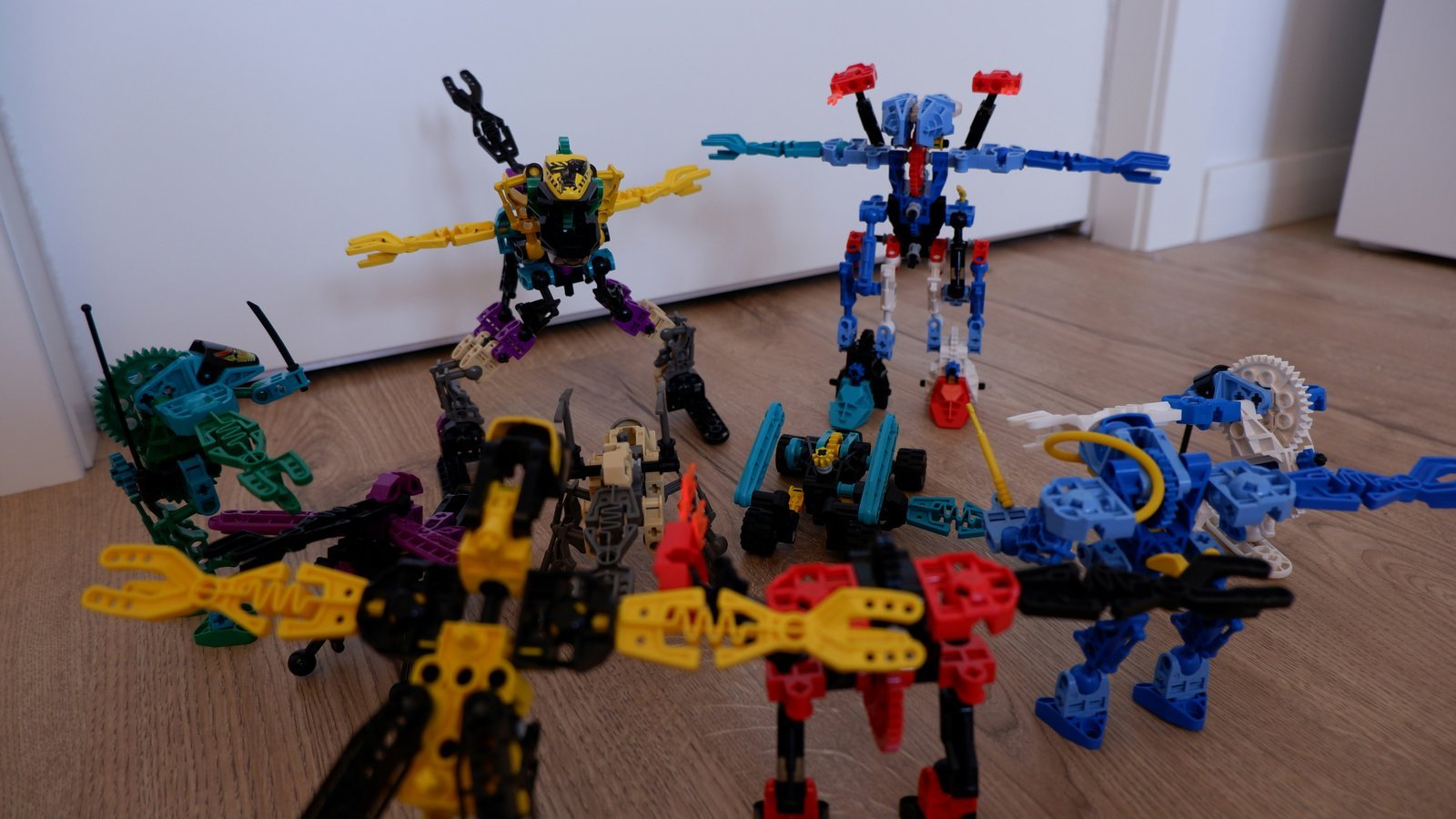

Introduction to STEM Toys for Young Kids
STEM education, encompassing Science, Technology, Engineering, and Mathematics, plays a vital role in shaping the foundational skills of young children. For 5-year-olds, particularly, the exploration of these subjects through interactive and engaging methods can stimulate curiosity and promote critical thinking. STEM toys provide an excellent platform for children to engage in hands-on learning experiences that are essential at this formative stage.
Through the use of STEM toys, children are encouraged to experiment, build, and solve problems, all while enjoying the process of learning. This approach not only fosters intellectual development but also enhances social and emotional skills as children often collaborate during play. When children work cooperatively on projects, they develop communication skills and learn the value of teamwork, which is crucial for their long-term social development.
Non-screen play, especially through STEM activities, shifts the focus from passive consumption to active engagement. This is particularly significant in an age where screens dominate children’s attention, leading to concerns about reduced interaction and engagement with the physical world. Engaging with STEM toys offers myriad benefits, including improved cognitive abilities as children learn to think logically and critically. Additionally, the tactile experience inherent in these toys promotes fine motor skills and hand-eye coordination.
By incorporating STEM toys into playtime, parents can ensure that their children are not only entertained but are also developing essential life skills. This blend of fun and education lays a strong groundwork for future academic success and personal growth. Encouraging exploration and creativity through non-screen activities is paramount in raising well-rounded individuals prepared for the challenges of the modern world.
Criteria for Selecting the Best STEM Toys
When it comes to choosing the best STEM toys for 5-year-olds, parents should consider several key criteria to ensure the toys contribute positively to their child’s development. First and foremost, the educational value of the toy is paramount. A well-designed STEM toy should encourage critical thinking, problem-solving, and creativity. It should challenge children to engage with concepts in science, technology, engineering, and mathematics in a way that is fun and interactive. This ensures that the learning experience is both enjoyable and enriching.
Age-appropriateness is another crucial factor. Toys should be suitable for a child’s developmental stage, allowing for both independent and guided play. Toys that are too advanced may lead to frustration, while ones that are too simple might not provide enough engagement. Therefore, parents should look for toys that align with their child’s interests and skill level, ensuring that they are captivated and challenged appropriately.
Safety is also an essential consideration. Parents must ensure that toys are made from non-toxic materials, have no small parts that pose a choking hazard, and meet safety standards set by regulatory bodies. The well-being of children should always be the top priority when selecting toys.
Additionally, an engaging design can significantly influence a child’s willingness to explore and learn. Bright colors, interesting shapes, and interactive components can attract children and encourage prolonged playtime. Versatility is another valuable trait; toys that can be used in various ways not only encourage creativity but also allow for extended engagement across different types of play, fostering imagination and problem-solving skills.
Top 5 STEM Toys for 5-Year-Olds
Selecting the right STEM toys for 5-year-olds not only fosters an interest in science, technology, engineering, and mathematics but also provides a great avenue for play-based learning. Here are our top five recommendations:
1. LEGO Classic Creative Bricks
LEGO Creative Bricks offer endless building possibilities and are an excellent way for young minds to explore construction concepts. These colorful blocks come in various shapes and sizes, allowing children to create anything from simple structures to complex designs. This toy not only enhances fine motor skills but also promotes critical thinking as children imagine and bring their designs to life.
2. Snap Circuits Jr.
Snap Circuits Jr. is a hands-on introduction to electronics. This set includes components like switches, resistors, and circuits that snap together easily without tools. It allows children to build different electronic models while learning the basics of circuitry. The ability to light up a bulb or power a fan through their creations solidifies foundational knowledge in technology and engineering.
3. ThinkFun Gravity Maze Marble Run
This engaging maze-building game challenges players to construct a path for a marble using spatial reasoning skills. The Gravity Maze incorporates elements of physics, such as gravity and motion, making it an excellent educational tool. With a range of difficulties, children can gradually enhance their problem-solving abilities and logical thinking.
4. Osmo – Genius Starter Kit for iPad
Osmo offers a unique interactive experience by combining digital learning with hands-on play. The Genius Starter Kit includes various games that involve problem-solving, spelling, and creative drawing. It promotes learning in a fun, interactive way while also fostering cooperation and teamwork as children play together.
5. Learning Resources Coding Critters
Coding Critters introduce children to coding concepts through fun, storytelling adventures. These interactive animals require players to input commands to guide them through various activities. By engaging in this form of play, children enhance their logic and sequencing skills, vital components of computational thinking.
Benefits of Non-Screen Play
Engaging in non-screen play offers numerous benefits, especially for young children, emphasizing STEM learning through hands-on experiences. One of the primary advantages is the enhancement of creativity. Non-screen activities allow children to explore their imaginations in unstructured environments, where they can innovate and invent without the constraints often found in digital media. Activities such as building with blocks or participating in science experiments encourage them to think outside the box, fostering creativity that can lead to original ideas and solutions.
Moreover, non-screen play is crucial for developing problem-solving skills. When children encounter challenges during play, they learn to strategize and find solutions independently. This process of trial and error is essential for cognitive development, reinforcing their ability to think critically and logically. For instance, when assembling a puzzle or figuring out how to make a structure stand with various materials, they are honing their analytical skills, which are foundational in STEM fields.
Fine motor skills are another area significantly enhanced through non-screen play. Activities that involve manipulating small objects, such as LEGO bricks or art supplies, help strengthen the small muscles in children’s hands. This development is critical for tasks that will be required later in life, such as writing and using tools. Tactile interaction, facilitated by non-screen toys, also stimulates sensory development, as children learn to navigate textures, weights, and physical properties, which deepens their understanding of the world around them.
In conclusion, the myriad benefits of non-screen play extend far beyond mere entertainment. They encompass essential aspects of cognitive and physical development, preparing children not only for future academic pursuits in STEM but also for life skills that are vital in an increasingly complex world.
How to Encourage STEM Learning at Home
Encouraging STEM learning at home is achievable and can be done using everyday items and activities that stimulate your child’s interest in science, technology, engineering, and mathematics. The key is to create an environment that fosters curiosity, experimentation, and hands-on problem-solving. One effective way to start is by integrating simple science experiments into daily routines. For instance, measuring ingredients while baking can introduce your child to basic math and chemistry concepts.
Incorporating play into learning is essential. Providing building sets, such as blocks or LEGO, allows children to explore engineering principles while stimulating their creativity. Ask your child open-ended questions about their creations to encourage critical thinking. For example, you might inquire how they can improve the stability of their structure, which promotes problem-solving skills in a fun way. Additionally, arts and crafts can be used to explore concepts such as symmetry, balance, and color theory.
Outdoor activities can also enhance STEM learning. Nature walks present opportunities to observe various forms of life and geological features, effectively combining biology and earth science. Encourage your child to ask questions about their surroundings, fostering a sense of wonder and curiosity. Similarly, gardening can introduce basic concepts of biology and ecology, allowing them to understand where food comes from and how ecosystems function.
Moreover, involve your children in simple household tasks that require measurement and planning, such as sewing or home improvement projects. These activities provide real-world applications of mathematical and engineering principles while also building practical life skills. It is essential to celebrate their successes, no matter how small, to build confidence and a passion for learning.
Incorporating these practical tips into your daily lives lays the groundwork for a strong STEM foundation without relying on screens, ultimately cultivating an enriching, hands-on learning experience.
Educational Activities Complementing STEM Toys
Incorporating educational activities into playtime with STEM toys can greatly enhance a child’s understanding of scientific, technological, engineering, and mathematical concepts. These activities not only complement the use of STEM toys but also stimulate creativity, curiosity, and critical thinking in young learners.
One engaging activity is creating simple science experiments at home. Children can easily explore basic scientific principles by conducting experiments like baking soda and vinegar volcanoes or growing crystals using sugar or salt. These hands-on experiments not only pique children’s interest but allow them to witness and understand basic chemical reactions and the concept of solubility. Additionally, they can be encouraged to predict the outcomes of their experiments, fostering their analytical thinking skills.
Crafting can also serve as a vital complement to STEM toys. Activities such as building bridges out of popsicle sticks or designing robots with recycled materials encourage engineering and problem-solving skills. Crafting promotes fine motor skills and introduces children to concepts such as balance, symmetry, and structural integrity. As children create their projects, encourage discussions on the materials used and the principles of design and construction.
Outdoor exploration is another excellent way to connect with STEM concepts. Simple nature walks can be transformed into explorations of biological systems where children observe and identify different plant species or insects. Incorporating a magnifying glass enables a closer examination of textures and details, enhancing observational skills. Parents can introduce basic math by counting different shapes or measuring the height of trees, making the learning experience more interactive.
By integrating these educational activities with STEM toys, children can achieve a deeper understanding of complex concepts while enjoying their playtime. These activities provide a holistic approach to learning through exploration, creativity, and hands-on experience, setting a solid foundation for future STEM learning.
Choosing the Right STEM Toy for Your Child
When selecting the ideal STEM (Science, Technology, Engineering, Mathematics) toy for your five-year-old, it is essential to align the toy’s capabilities with your child’s interests and developmental stage. A tailored approach can greatly enhance the educational value and enjoyment of the play experience.
First, consider your child’s passions. Do they show a keen interest in building, exploring nature, or perhaps tinkering with gadgets? For example, if your child enjoys constructing items, building kits such as magnetic blocks or LEGO sets may be appropriate. Toys that encourage creative construction can foster problem-solving skills and spatial awareness.
It is also critical to assess the developmental stage of your child. At five years old, children are typically at a cognitive level where they can engage in more complex tasks, such as basic engineering principles or simple coding concepts. Choose toys that challenge them without causing frustration. For instance, robotics kits designed for their age group can introduce foundational coding logic in a playful manner.
Moreover, consider the level of guidance required by the toy. Some children thrive with independent exploration, while others may benefit from more structured activities. Look for STEM toys that provide a range of options, allowing your child to play independently or with parental involvement. This flexibility can significantly enrich their learning experience.
Finally, recognize the importance of promoting various skill sets. While selecting a single STEM toy is valuable, opting for a variety that encompasses different fields of science and engineering can enhance overall learning. For example, science kits that explore biology, chemistry, or physics can stimulate curiosity and foster an enduring love for these subjects.
Safety Considerations for STEM Toys
When selecting STEM toys for five-year-olds, safety should be paramount in ensuring a beneficial and secure play experience. These educational tools often engage children in scientific, mathematical, engineering, and technological pursuits that foster learning and creativity. However, certain safety concerns must be acknowledged to protect young users.
One of the primary considerations involves the materials used in the construction of the toys. Parents should look for products made from non-toxic, durable materials that comply with safety standards. Many toys today are crafted from plastic, wood, or metal, and ensuring they are free of harmful chemicals such as BPA, phthalates, or lead is crucial. Checking for certifications, such as ASTM and EN71, can provide peace of mind regarding the material safety of the toy.
Another significant concern relates to small parts, which may pose a choking hazard for younger children. STEM toys often involve various components that can be easily lost or swallowed. Therefore, it is essential to adhere to the manufacturer’s age recommendations and choose toys that are appropriate for the child’s developmental stage. Families should assess whether a toy has large enough pieces that cannot be inadvertently ingested by a curious five-year-old.
Finally, understanding the toy’s design is crucial, especially if it includes moving parts or electronic components. All toys should be inspected for sharp edges, pinch points, and other features that could lead to injury. When evaluating safety, it is valuable to read product reviews and gather recommendations from trusted sources to ascertain that the toy not only promotes STEM learning but does so in a safe manner.
Conclusion and Final Thoughts
In conclusion, incorporating STEM toys into the playtime routines of 5-year-olds not only supports their early childhood development but also fosters a love for learning. Throughout this blog post, we explored a variety of non-screen options that encourage critical thinking, creativity, and problem-solving skills. STEM toys serve as valuable tools that introduce foundational concepts in science, technology, engineering, and mathematics in a fun and engaging manner.
Furthermore, these toys facilitate hands-on learning, allowing children to explore and experiment in a tactile way. As they build, create, or conduct experiments, young learners enhance their cognitive abilities and develop essential life skills, such as teamwork and perseverance. It’s important for parents to identify the most suitable STEM options for their children, taking into consideration their individual interests and learning styles.
As we reiterate the significance of choosing non-screen alternatives, it becomes imperative for caregivers to seek out toys that spark imagination and foster learning outside digital platforms. Whether it’s robotics kits, building blocks, or science experiments, the benefits of these toys extend far beyond entertainment; they are instrumental in preparing children for future challenges. By integrating STEM toys into daily play, parents can cultivate a well-rounded educational experience that not only entertains but also inspires young minds to explore the wonders of their world.